French and English, side by side
In Vanuatu, some schools teach in French, others in English, and many families, administrations and companies switch from one language to the other in the same day. The country is a member of the International Organisation of La Francophonie.
For us, it is natural ground. French is our working language, just as English is: your meetings, your course materials, your contracts and your websites can exist in both languages, written by the same team. For Bislama, we call on a specialist or a translator as needed.
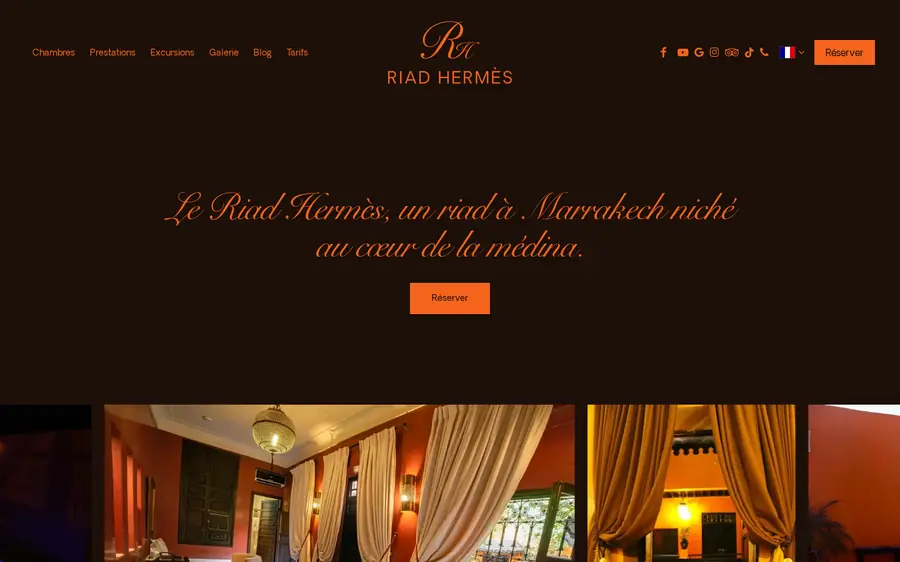
A bilingual website is built like two websites that answer each other: each page has its French version and its English version, linked together for Google, with a clear language selector. This is what we did for the Riad Hermès, in Marrakech, taken from 1 to 8 languages without changing its design.
Personal data: a law adopted in 2024
In 2024, Vanuatu gave itself a general personal data law: the Data Protection and Privacy Act No. 13 of 2024, also published in French as the law on the protection of personal data. It follows the national data protection and privacy policy of 2023, and its drafting was supported by the Council of Europe.
The law covers processing carried out in Vanuatu and data collected in the country. It provides for special categories, such as biometric, genetic or offence-related data, which call for more precautions. The same year, the Digital Safety Authority Act No. 15 of 2024 created an authority in charge of digital safety.
The subject is concrete: in November 2022, a cyberattack put a large part of the state’s online systems out of service for several weeks. Our method, before any automation: a written map of the data (what is collected, where it is stored, who accesses it), access limited by role, backup copies, then rules written into the contract.
Payments, connection and way of working
Cash is still widely used; bank cards are common in tourism and in the shops of Port Vila and Luganville. The submarine cable linking Port Vila to Fiji since 2014 has improved connection in the towns, but on remote islands, access is mostly through the mobile network.
We take this into account: light websites, designed first for the phone; live training sessions, complemented by written materials that can be read offline; exchanges by WhatsApp or e-mail between sessions.



 4,8