Skip to content
TeamElGhazi
ENChange language
Make a request
Python for Kids and Teens
TeamElGhazi Junior: coding

Python for Kids and Teens: First Programs

After the blocks of Scratch, real code. Line by line.

At a glanceThis course takes lower and upper secondary pupils from block programming to a real language: Python. They write their first programs, a small game and a quiz, and present a project at the end. It can be followed one-to-one or in a small group, online and live with a trainer, or on site, at a school or at home. No prior level is required; a parent enrols the child.

Google4,8out of 5 · 11 Google reviews

The fact sheet

Format
One-to-one or small group; online and live, or with a trainer present, at a school or at home
Age
lower and upper secondary school
Prerequisites
None. Being able to read and use a keyboard; Scratch is a plus.
Price
One-to-one lessons: on quotation; small group: price depends on the format, please ask
Schedule
Your choice of slot on planning.teamelghazi.com for one-to-one lessons; agreed with the group otherwise
At the end

Your child
leaves with.

The final project

A small game or a tool created by the young person, presented at the end

The tools
  • Python 3
  • a simple editor
  • Python's turtle
Audience
Beginners; enrolment is made by a parent
Language of the sessions
Sessions, materials and exchanges in 100 languages. Online, at a school or at home.
The programme

What does your child do, step by step?

The programme follows the young person's pace. Each session ends with a program that runs.
  1. 01Stage 1Displaying, calculating, asking for a first name: the first lines, with no fear of mistakes
  2. 02Stage 2Conditions and loops: a "guess the number" game
  3. 03Stage 3Drawing with code: shapes and patterns with Python's turtle
  4. 04Stage 4Lists: a quiz that asks questions and counts the points
  5. 05Stage 5Reading an error message and fixing it alone
  6. 06ProjectThe project: a small game or a tool of their own, presented to the family or the group
Un de nos supports

Les variables, des boîtes avec une étiquette

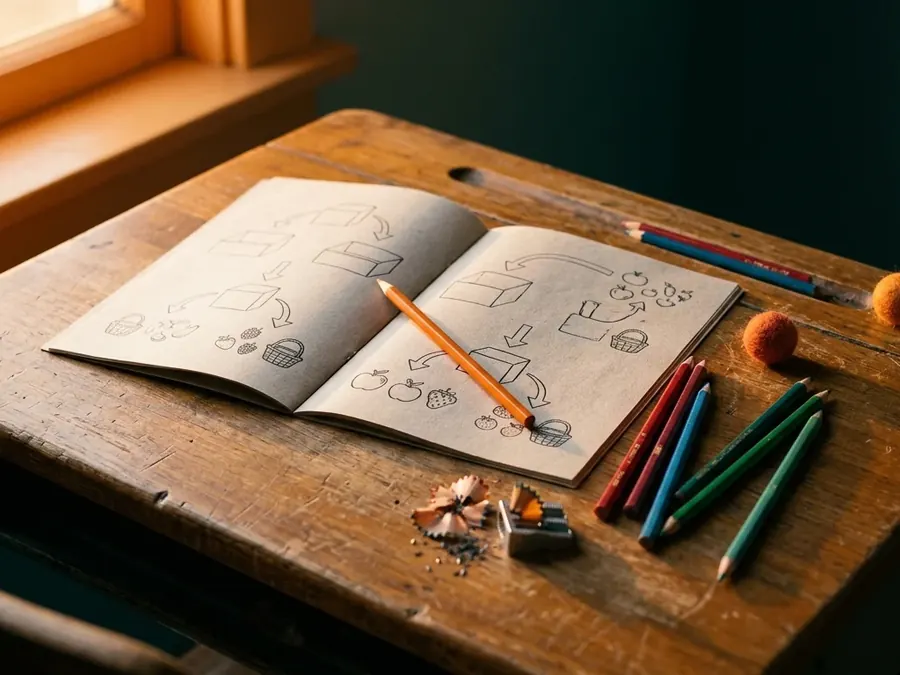
Une page de notre support « Penser comme un ordinateur » pour les 10 à 12 ans : on range, on change, on affiche, et chaque ligne se lit à voix haute.
Atelier programmation · 10 à 12 ans · étape 3Les variables : des boîtes avec une étiquetteSupport « La logique algorithmique et les variables en Python »

En Python, on crée une variable avec le signe =. Ici, = ne veut pas dire « égal » : il veut dire « range dans la boîte ».

score = 0score = score + 10   # on ajoute 10 pointsscore = score + 5    # encore 5 pointsprint(score)         # affiche 15
AutoriséÀ éviter
age, score_final, nombre22nombre : jamais un chiffre au début
nombre_de_butsmon score : pas d'espace, on écrit _
La règle du jour

Un ordinateur n'est ni intelligent ni bête : il est obéissant. Si le résultat est faux, on cherche l'instruction, on la corrige, on recommence.

Support de cours TeamElGhazi · 2 heures, avec une pause

Good to know

What parents
ask us.

  • 01

    At what age should you start Python?

    Most often in lower secondary school, when the child reads and types comfortably. Before that, block programming (Scratch, ages 8 to 11) teaches the same logic without typing errors. An upper secondary pupil who is a complete beginner is welcome; a motivated one can then join Python Fundamentals, the online course for beginners.

    One example: a 13-year-old pupil has finished Scratch and is bored. In one-to-one lessons, they write in Python the mental arithmetic game they had made with blocks, then add a timer and a high-score table.

  • 02

    Have you already taught Python to young people?

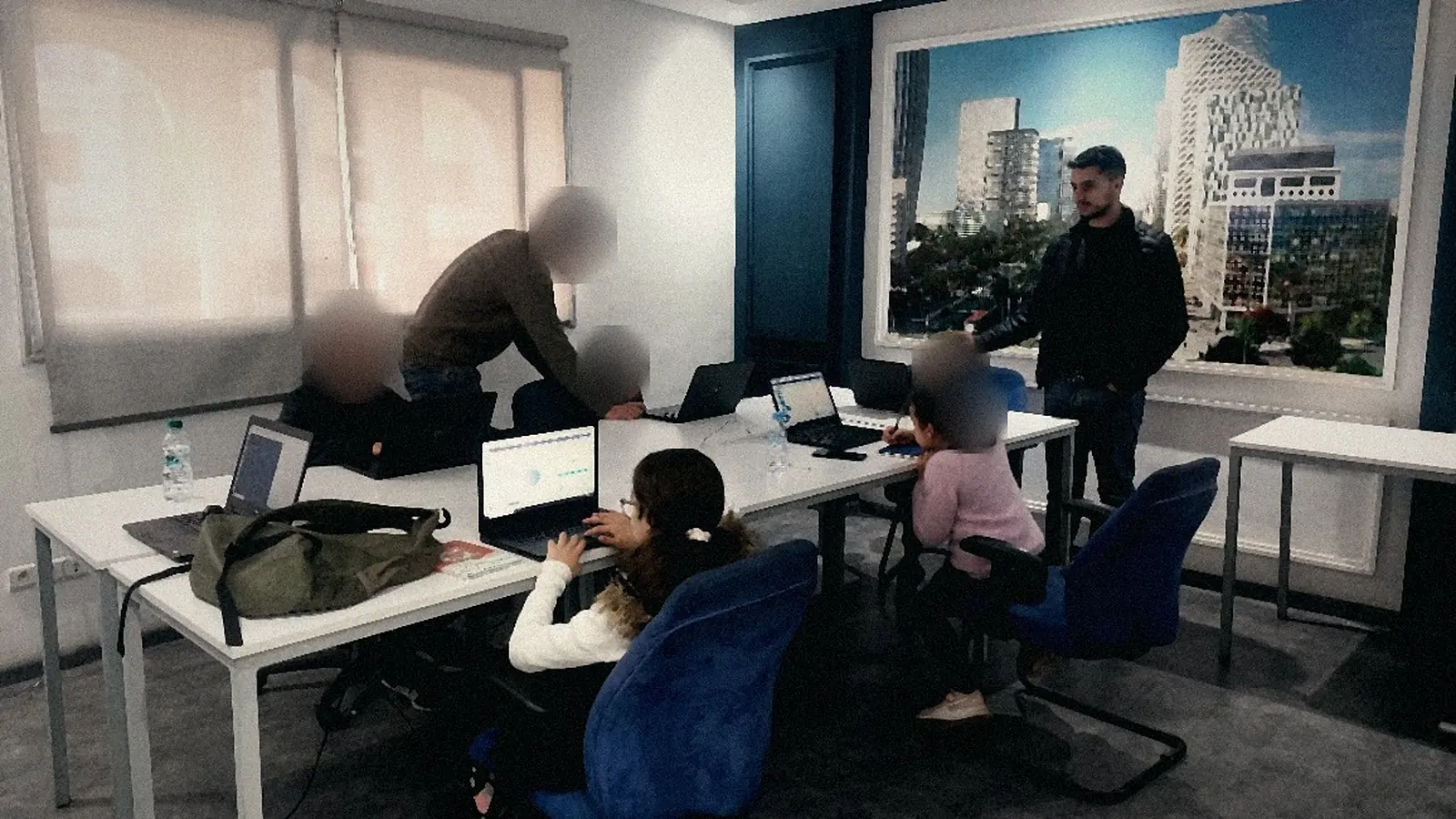
    Yes. We give one-to-one lessons to lower secondary pupils, and since July 2026 we have run a small Sunday group, online, where lower and upper secondary pupils build a website and then move on to Python. The page shown above comes from one of our materials for 10 to 12-year-olds. We never name our young pupils and never show their faces.

    Between sessions, for homework, TEMO, our AI tutor, follows the same rule as the trainer: it gives a hint, not the solution.

  • 03

    How do you enrol your child?

    Click "Enrol" and tell us their age, their level and what they enjoy. We suggest the format: one-to-one lessons, with times chosen on planning.teamelghazi.com, or a small group. Online sessions are live: the child shares their screen and the trainer guides them without doing the work for them. On site, the session takes place with a trainer present, at a school or at home; the location is agreed with you at enrolment.

How it works

De la première ligne au jeu montré à la famille

  1. 01
    Un programme qui dit bonjourIl affiche, calcule, demande un prénom : la première séance finit par un programme qui tourne.
  2. 02
    Devine le nombreConditions et boucles, dans un vrai petit jeu qu'il fait essayer à quelqu'un.
  3. 03
    La tortue qui dessineFormes et motifs tracés par le code, puis modifiés à son goût.
  4. 04
    Le quiz qui compte les pointsLes listes, et un message d'erreur lu puis corrigé seul.
  5. 05
    Le projet devant la familleSon jeu ou son outil, montré et expliqué à la dernière séance.
The proof

Among our
projects.

What was delivered, for whom and when; each card leads to its page.

Families (never named)

For
Families (never named)
What we did
One-to-one lessons for lower secondary pupils, and a small online Sunday group "AI and web development" where lower and upper secondary pupils move from the website to Python
When
Since July 2026
See the page : TeamElGhazi Junior: coding

TEMO: how we built our AI tutor

The hardest part was not getting the AI to answer. It was stopping it from saying everything.

Audience
Pupils and students, from middle school to university
Product
TEMO, AI tutor and homework help
The case study
In the same field

Related
courses.

Same field, different tool or level.
Frequently asked questions

Your questions
about this course.

4 answers

My child has never coded: can they start with Python?

Yes, in lower and upper secondary school. For a younger child, we recommend starting with Scratch.

One-to-one or in a group: which should you choose?

One-to-one, the trainer follows your child's pace and schedule. In a small group, they also learn to explain and show their work.

Will it help them at school?

We do not promise better marks. They learn to break a problem down, to test and to correct their mistakes, which helps in every subject.

Can parents attend the sessions?

Yes, especially at the start. The last session is often a presentation of the project to the family.

Your request

Your request
comes in here.

in 100 languages
01 · Make a request
Your request
You
At least one of the two: email or phone.
Sending

Your data is used only to reply to you (Law 09-08, GDPR). Privacy
02 · Meeting30 min

Individuals, institutions, companies: you choose your slot online. A first 30-minute conversation for a project, or your lesson hours.

Choose a slot
03 · A call, an e-mail06 60 66 59 52

Call us, or write to contact@teamelghazi.com

Service delivered in
  • 100 languages
From Casablanca: on site in Morocco, remotely everywhere.

Their first project
starts here.

The course is already selected in the form. A question before you enrol? Let us take 30 minutes.

Make a requestMeeting