




Skip to content
TeamElGhazi
EN-USChange language
Submit a request
TeamElGhazi Junior: coding
Training and AI skills

TeamElGhazi Junior: coding, robotics and AI for kids ages 8 to 14

Seven programs where your child creates a game, a robot or a video, and presents it.

At a glanceTeamElGhazi Junior brings together seven programs in coding, robotics and artificial intelligence: six for kids ages 8 to 14, then Python for middle and high school students. Each program ends with a project the child presents: a game, a robot, a video. Scratch is taken online from home; the others take place at a school or institution, at home or online. Parents receive the program and the dates, then see the final project.

Google4,8out of 5 · 11 Google reviews

En pratique

Age
8 to 14 years old; Python for middle and high school students
Programs
Scratch · digital creation · AI Geniuses School · Arduino robotics · programming club · 3D and video games · Python for kids and teens
Duration
1 month (Scratch), 2-week camps, or a duration set by the group
Where
Scratch online; the others at a school or institution, at home or online, set at enrollment
Result
a presented project and a certificate

LanguagesSessions and exchanges with parents in 100 languages. Scratch online; the other programs at a school or institution, at home or online.

The programs

One program
per age.

The age and format are on each card. The details are on the program page.
An example

A typical
situation.

A common case, described as it happens.
Example
A 10-year-old girl takes apart everything she finds, and her parents are torn between coding and robotics. We recommend robotics: she plugs things in, she tests them, and the coding comes along with the robot.
typical situation
TeamElGhaziAI in the field and in the water8

Team project

My AI assistant for my village

Choose a real problem in your village and imagine a smart assistant that helps solve it. Then present it to the class in one minute.

Team members:
The problem in our village (water, trees, livestock, weather…):
The name of our smart assistant:
Trigger → decision → action:
What examples (data) will it learn from?
When can it make mistakes? And who decides in the end?

Draw your smart assistant here (the machine, the sensor, the phone, the field…)

What I learned today

1. What is the difference between an "order" and an "example" for the machine?
2. Name one mistake that artificial intelligence can make:
3. How can it help my village with water or agriculture?

TeamElGhazi · Goethe-Institut MarokkoAI-Magic
A page from our materials: the team project from the student booklet (Goethe-Institut workshop, Al Haouz), in English.
Among our work

Already done,
already delivered.

What was delivered, for whom and when; each card leads to its page.

Goethe-Institut Marokko: AI Workshops in Al Haouz

No computer, no internet: a board, a booklet, and AI becomes clear.

Pour
Goethe-Institut Marokko
Ce qui a été fait
Introductory AI workshops, in Arabic, for students of a high school and a middle school in the province of Al Haouz, with a student booklet designed for the occasion
Quand
November 16 and 17, 2026
The case study

TEMO: How We Built Our AI Tutor

The hardest part wasn't getting the AI to answer. It was stopping it from saying everything.

Audience
Students, from middle school to university
Product
TEMO, AI tutor and homework help
The case study
How it works

De l'inscription au projet présenté

  1. 01
    Trois réponses du parentL'âge de l'enfant, son niveau, ce qu'il aime : les jeux, les robots, le dessin, les vidéos.
  2. 02
    Le programme, la date, le lieu, le prixNous répondons avec la prochaine session et le programme qui correspond.
  3. 03
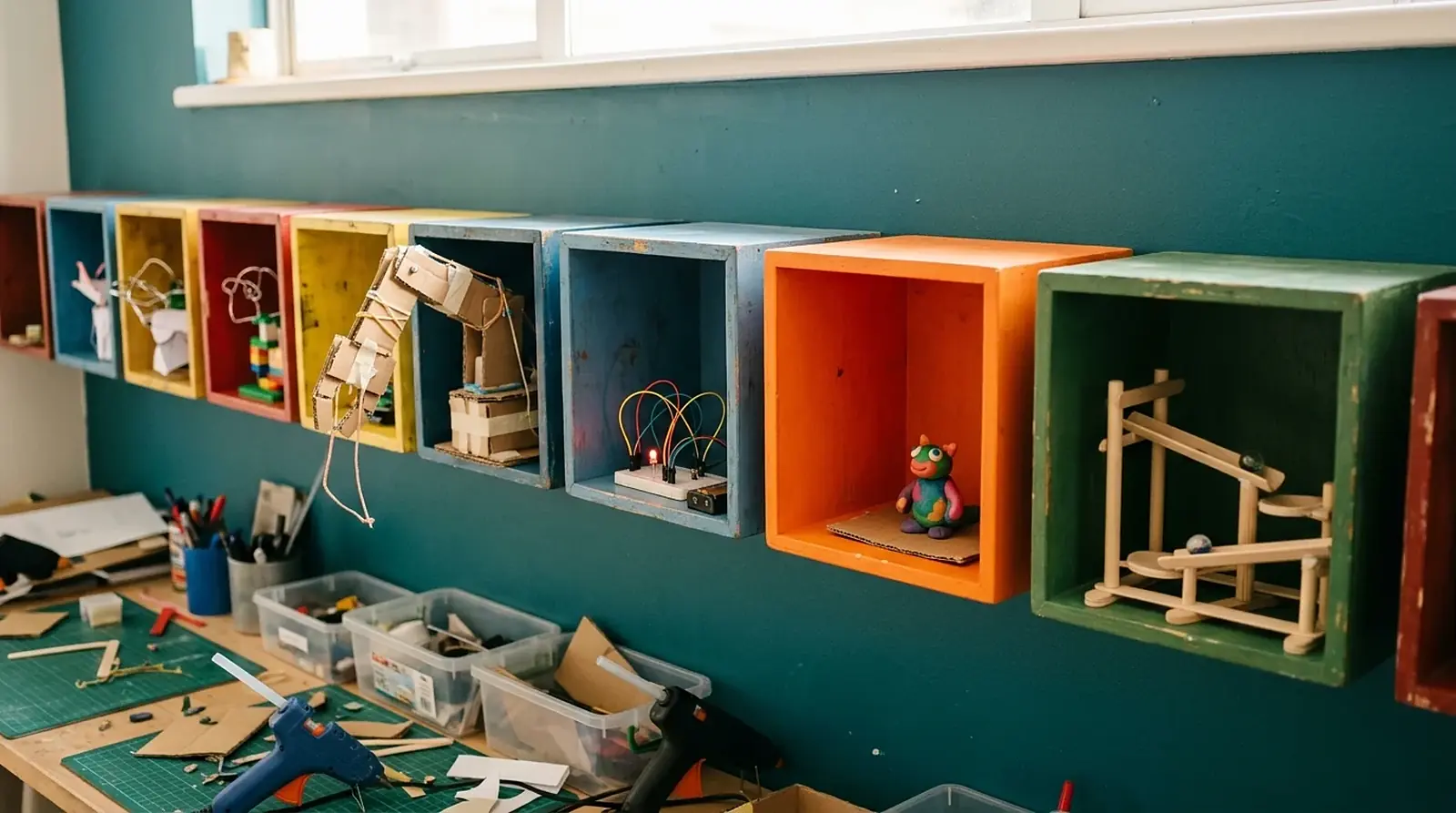
    L'enfant fabriqueChaque séance fait avancer l'objet ; le formateur guide sans faire à sa place. Entre deux séances, TEMO donne une piste, pas la solution.
  4. 04
    La présentationL'enfant montre son projet devant le groupe ou devant vous, puis reçoit son attestation.
To choose well

Answers
before you choose.

What we are asked most often before getting started.
01

And after the program?

One habit stays, whatever the program: looking for the mistake instead of giving up. The older kids continue with Python for kids and teens, then Python Fundamentals in high school; after age 14, private lessons also take over.

Frequently asked questions

Your questions
about Junior.

5 answers

My child is a complete beginner: is that a problem?

No. All programs start with the basics; the instructor adapts the pace to the group.

Do we need to buy any equipment?

A computer and an internet connection are enough for Scratch. For robotics, the equipment used in the sessions is shared with you at enrollment.

Can it be explained to my child in Arabic or Darija?

Yes, and in 100 languages: the instructor explains in the child's language.

Do you publish photos of the kids?

Never a child's face or first name. We may show a project, from behind or without the child, only with your agreement.

What is the price?

You receive it with the next session, after the form. Payment terms are given to you at enrollment.

Your request

Your request
goes here.

in 100 languages
01 · Submit a request
Your request
You
At least one of the two: email or phone.
Sending

Your data is used only to reply to you (Law 09-08, GDPR). Privacy
02 · Meeting30 min

Individuals, institutions, companies: you choose your slot online. A first 30-minute conversation about a project, or your hours of lessons.

Choose a slot
03 · A call, an email06 60 66 59 52

Call us, or write to contact@teamelghazi.com

Service delivered in
  • 100 languages
From Casablanca: on site in Morocco, remotely everywhere.
Submit a requestMeeting